How to Boil Eggs Perfectly Every Time | Soft and Hard Boiled
Boiling eggs might seem like one of the simplest kitchen tasks. However, getting them just right can be surprisingly dependent on a few small details. Egg size, egg weight, and even where your eggs are stored can all affect the final result.
Today I’m sharing exactly how I boil soft-boiled eggs for toast soldiers. I’ll also explain how to make hard-boiled eggs for everyday meals. The timings will make sense once you understand what’s happening in the pot.
This is a true back-to-basics kitchen skill that’s cheap, practical, and incredibly useful.
Watch the Video
If you’d like to see this method step by step, you can watch the full video here:
How To Boil Eggs Perfectly Every Time (Soft and Hard Boiled)
More Simple Recipes You Might Enjoy
If you enjoy these everyday kitchen basics, you might also like:
- Overnight Blueberry Oats | Easy Make-Ahead Breakfast
- Mac and Cheese for Breakfast? Yes, Please!
- 3 Easy Macaroni Salads for Picnics & Potlucks (Make‑Ahead)
These are all simple, practical recipes that work beautifully for everyday family cooking.
Why Egg Size and Temperature Make a Difference
One of the biggest mistakes people make when boiling eggs is assuming all eggs cook the same way. In reality, size, weight, and starting temperature all play a role.
Egg Size & Weight
Smaller eggs heat through faster than larger ones. Through testing, I found:
- Smaller eggs (around 45g) took about 5 minutes for soft-boiled
- Standard Size 7 eggs (around 60g) needed around 6 minutes
That extra weight may not sound like much, but it’s enough to noticeably change the texture of the yolk.
Bench vs Fridge Eggs
Here in New Zealand, many of us store eggs on the bench, meaning they start closer to room temperature. Eggs straight from the fridge are much colder and need more time to cook through.
As a general rule:
- Bench-stored eggs cook faster
- Fridge-cold eggs need extra time
Once you factor these things in, boiling eggs becomes far more predictable.
Soft-Boiled Eggs (Perfect for Toast Soldiers)
Ingredients
- Eggs
- Water
- Salt
- Toast and butter, to serve
Method
- Bring a pot of salted water to a rolling boil.
Make sure there is enough water to fully cover the eggs. - Carefully add the eggs
Lower them gently into the boiling water using a spoon to prevent cracking. - Start the timer immediately
Timing will depend on egg size and temperature:- 45g eggs (bench-stored): 5 minutes
- 60g eggs (bench-stored): 6 minutes
- Fridge eggs: add an extra 30–60 seconds
- Remove and serve straight away
Soft-boiled eggs are best eaten hot.
How to Serve Soft-Boiled Eggs with Toast Soldiers
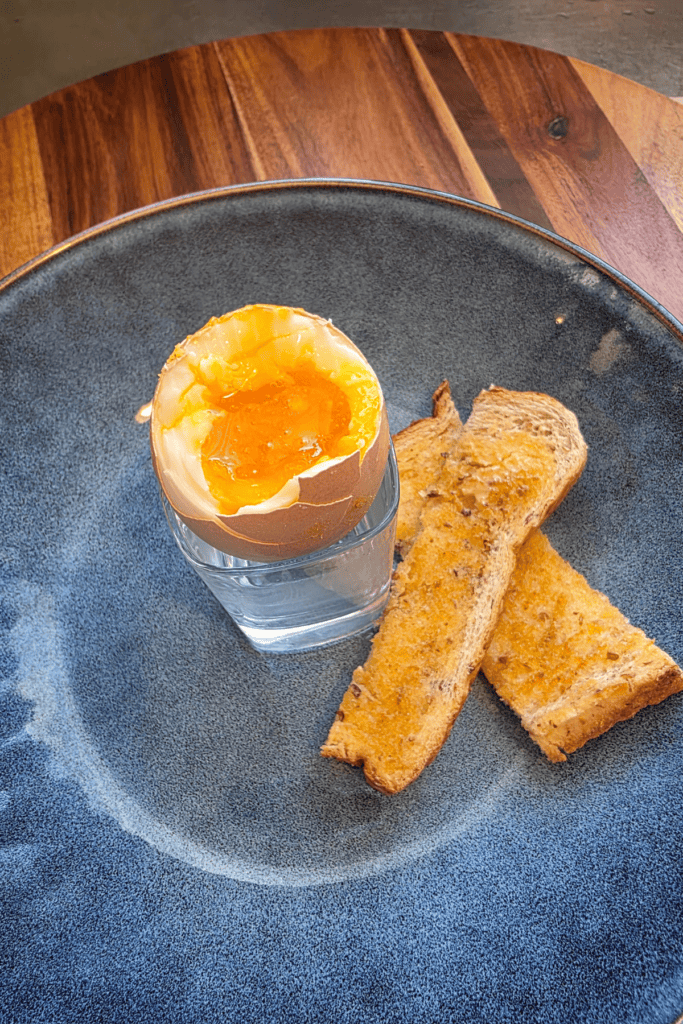
Place the egg into an egg cup or small bowl. Using a sharp knife, gently tap around the top third of the egg to crack the shell. Then, lift the top off.
Season lightly with salt and pepper and serve with hot buttered toast, cut into long strips. These “toast soldiers” are perfect for dipping straight into that golden, runny yolk.
It’s simple, comforting, and one of those meals that never seems to get old.
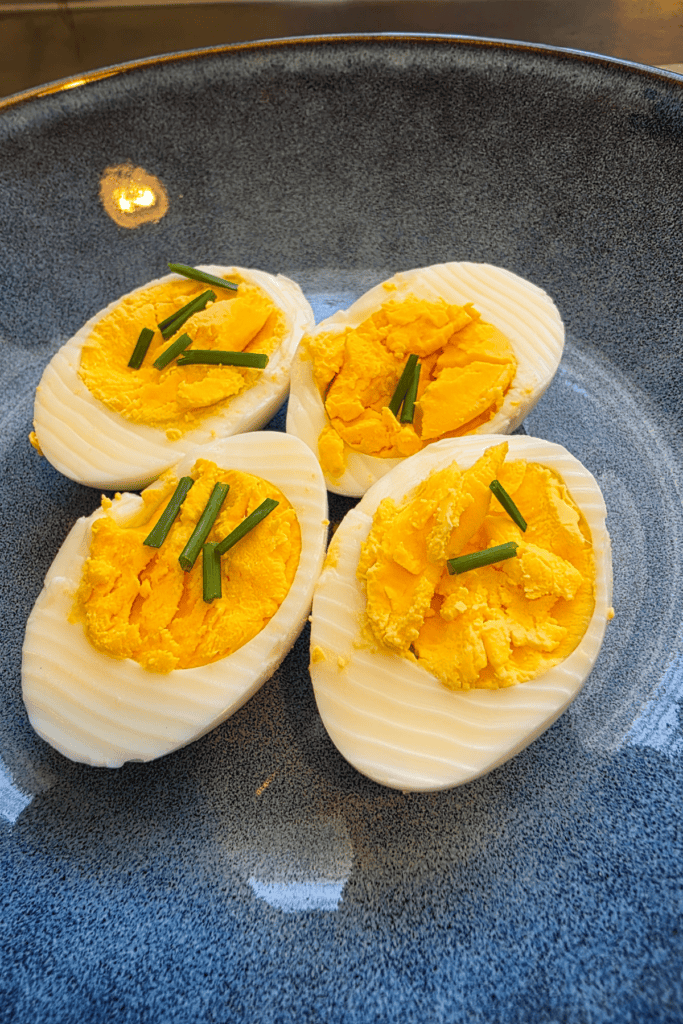
Hard-Boiled Eggs (Fully Cooked & Easy to Peel)
When it comes to hard-boiled eggs, the same principles apply. Size and starting temperature still matter. The cooking method changes slightly. Larger eggs and fridge-cold eggs need more time to cook through, while smaller or bench-stored eggs finish sooner.
This method is gentle and reliable and helps avoid overcooked, chalky yolks.
Ingredients
- Eggs
- Water
Method
- Place the eggs into a pot
Arrange them in a single layer if possible. - Cover with cold water
Make sure the eggs are fully submerged. - Bring to the boil
Turn the heat on and bring the pot to a full boil. - Remove from heat and cover
Once boiling, place a lid on the pot, remove it from the element, and start the timer:- 11 minutes for smaller eggs or bench-stored eggs
- 13 minutes for larger eggs or eggs straight from the fridge
- Cool the eggs.
Drain and place the eggs into cold or icy water for 5–10 minutes to stop the cooking process. - Peel or store
Peel from the wider end where the air pocket sits — this usually makes peeling much easier.
Stacey’s Kitchen Tips & Other Useful Hints
- Eggs are easiest to peel once they’ve cooled slightly — don’t rush this step
- Peeling from the wide end helps you get under the membrane more easily
- Older eggs tend to peel better than very fresh eggs
- If boiling eggs for the week, leave them unpeeled until needed to keep them fresher
- Label boiled eggs in the fridge if you’re also storing raw eggs
Other Handy Ways to Use Eggs
Eggs are one of the most versatile and budget-friendly ingredients to keep on hand. Beyond boiling, they’re great for:
- Quick omelettes and scrambled eggs
- Egg salad for sandwiches
- Adding protein to salads and grain bowls
- Baking and desserts
- Binding fritters, meatballs, and patties
- Stretching meals when feeding a crowd
Timing Cheat Sheet
- 5 minutes – Soft-boiled (45g eggs)
- 6 minutes – Soft-boiled (60g eggs)
- 7 minutes – Jammy / custardy centre
- 11 minutes – Hard-boiled (smaller or bench eggs)
- 13 minutes – Hard-boiled (large or fridge eggs)
Final Thoughts
Boiling eggs isn’t about one exact time that suits everyone. It’s about understanding how egg size, weight, and temperature affect the outcome. Once you know that, it becomes second nature.
You might dip toast soldiers into a soft-boiled egg. You could also prep hard-boiled eggs for the week ahead. This method will help you get perfect results every time.
FAQs
How long should I boil eggs for soft centres?
Soft-boiled eggs usually take 5–6 minutes. The exact time depends on the size of the eggs and if they are bench-stored or straight from the fridge.
Why do my boiled eggs turn out differently each time?
Egg size, egg weight, and starting temperature all affect cooking time. Smaller or bench-stored eggs cook faster than larger or fridge-cold eggs.
Are eggs easier to peel when they’re cold?
Yes. Cooling eggs in cold or icy water helps stop the cooking process. It also makes them easier to peel. This is especially true when you start peeling from the wide end.
Can I store hard-boiled eggs in the fridge?
Unpeeled hard-boiled eggs will keep in the fridge for up to 7 days. Peeled eggs are best used within 2–3 days.
How to Boil Eggs Perfectly Every Time | Soft and Hard Boiled
Ingredients
Soft Boiled Eggs
- eggs
- water
- salt and pepper to taste
- buttered toast to serve
Hard Boiled Eggs
- eggs
- water
Instructions
Soft Boiled Eggs
- Bring a pot of salted water to a rolling boil making sure there is enough water to fully cover the eggs.
- Lower the eggs gently into the boiling water using a spoon to prevent cracking.
- Start the timer immediately. Timing will depend on egg size and temperature: 45g eggs (bench-stored): 5 minutes. 60g eggs (bench-stored): 6 minutes. Fridge eggs: add an extra 30–60 seconds
- Remove and serve straight away. Soft-boiled eggs are best eaten hot.
Hard Boiled Eggs
- Place the eggs into a pot and arrange them in a single layer if possible.
- Cover with cold water making sure the eggs are fully submerged.
- Turn the heat on and bring the pot to a full boil.
- Once boiling, place a lid on the pot, remove it from the element, and start the timer:11 minutes for smaller eggs or bench-stored eggs13 minutes for larger eggs or eggs straight from the fridge
- Drain and place the eggs into cold or icy water for 5–10 minutes to stop the cooking process.
- Peel from the wider end where the air pocket sits — this usually makes peeling much easier.
Notes
- Eggs are easiest to peel once they’ve cooled slightly — don’t rush this step
- Peeling from the wide end helps you get under the membrane more easily
- Older eggs tend to peel better than very fresh eggs
- If boiling eggs for the week, leave them unpeeled until needed to keep them fresher
- Label boiled eggs in the fridge if you’re also storing raw eggs