How to Freeze Mashed Potatoes for Quick & Easy Meals
Leftover mashed potato is one of those things that can easily end up sitting in the fridge until it’s eventually forgotten about. You might have enough left for another meal but not necessarily have a plan for when you’ll use it.
Rather than letting it go to waste, I’ve started popping leftover mash straight into the freezer. It means the work of peeling, boiling and mashing the potatoes has already been done, and I’ve got an easy side ready to pull out when I need something quick.
There is a bit of a debate whether to freeze with or without the butter and milk added. Personally I like it better with the butter and milk. That is why this is perfect for leftover mash as it already contains the butter and milk.
There are a couple of really simple ways you can freeze mashed potato depending on how you think you’ll use it later. You can freeze individual portions for grabbing one or two at a time, or use my freezer bag method to store a larger amount while keeping it thin and flat so it freezes and defrosts much more quickly.
It’s such a simple little freezer habit, but it’s a handy one to know – especially when you’re trying to make the most of the food you’ve already cooked.
Watch the Video
In this week’s Friday Pantry Day video, I’m using the mashed potato left over from our dinner the night before and showing you exactly how I freeze it rather than letting it go to waste.
I’ll show you two different ways to portion it for the freezer, including my flat freezer bag method, and then I’ll show you how I reheat frozen mashed potato in the air fryer.
If you’ve ever wondered whether mashed potato actually freezes well or what it’s like once reheated, you can see the whole process from leftover mash to the finished result in the video.
Friday Pantry Day: Stop Wasting Leftover Mashed Potato! Freeze It for Easy Meals
Other Posts You May Like
- Homemade Instant Potato Soup Mix
- Sage & Onion Stuffing Mix
- Italian Herb Breadcrumbs
- 3 Ways to Make Homemade Sour Cream
- Homemade Cream Cheese
How to Freeze Mashed Potato
Before freezing, allow your leftover mashed potato to cool completely in the refrigerator. Once cold, you can freeze it using either of these methods.
Method 1: Freeze Individual Portions
This method is handy when you want to be able to take out only what you need.
- Scoop the cold mashed potato into individual portions.
- Shape each portion into a small puck or mound.
- Place the portions onto a lined tray or plate that will fit into your freezer.
- Freeze until firm.
- Once frozen, transfer the portions to a labelled freezer-safe bag or container.
- Remove individual portions whenever you need them.
This works particularly well for smaller households, lunches or nights when not everyone needs mashed potato.
Method 2: The Flat Freezer Bag Method
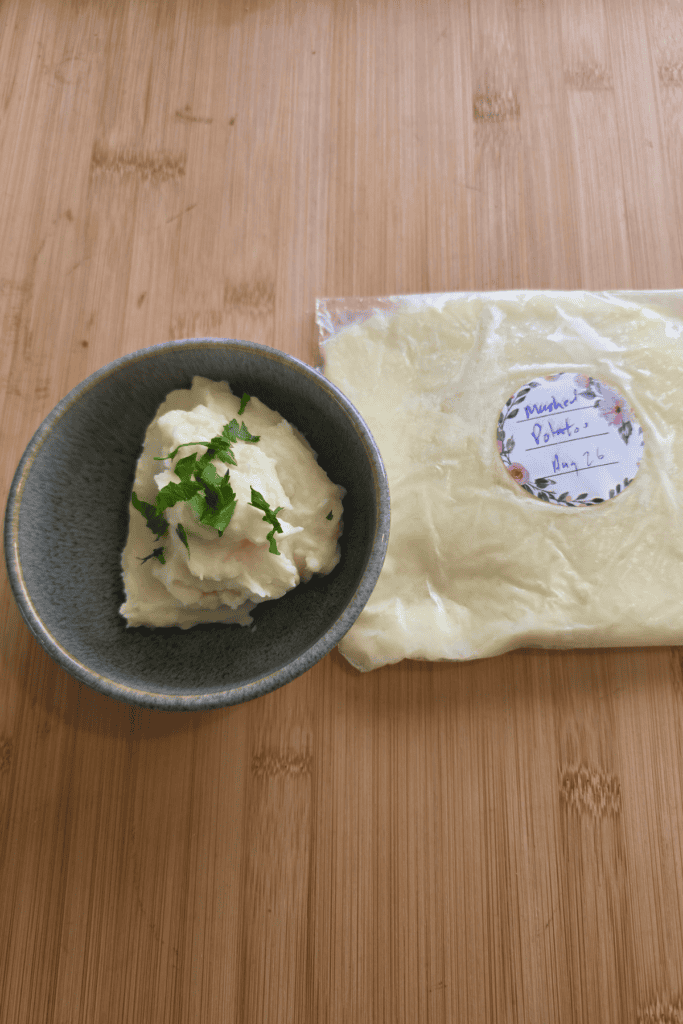
This is the method shown in the photo and it’s a great option when you have a larger amount of mash left over.
- Spoon the cooled mashed potato into a freezer-safe bag.
- Remove as much excess air as you can before sealing.
- Gently press the mashed potato out into a thin, even layer.
- Lay the bag flat in the freezer until completely frozen.
- Once frozen, it can be stored flat or stood up right alongside your other freezer meals.
Keeping the mash thin rather than freezing it in one large lump means it freezes faster, takes up less room and is much easier to defrost later.
And don’t forget to label and date the bag. It’s surprisingly difficult to identify a pale frozen mystery bag a couple of months later!
How to Reheat Frozen Mashed Potato
There are several ways you can reheat mashed potato, but in the video, I tested mine in the air fryer.
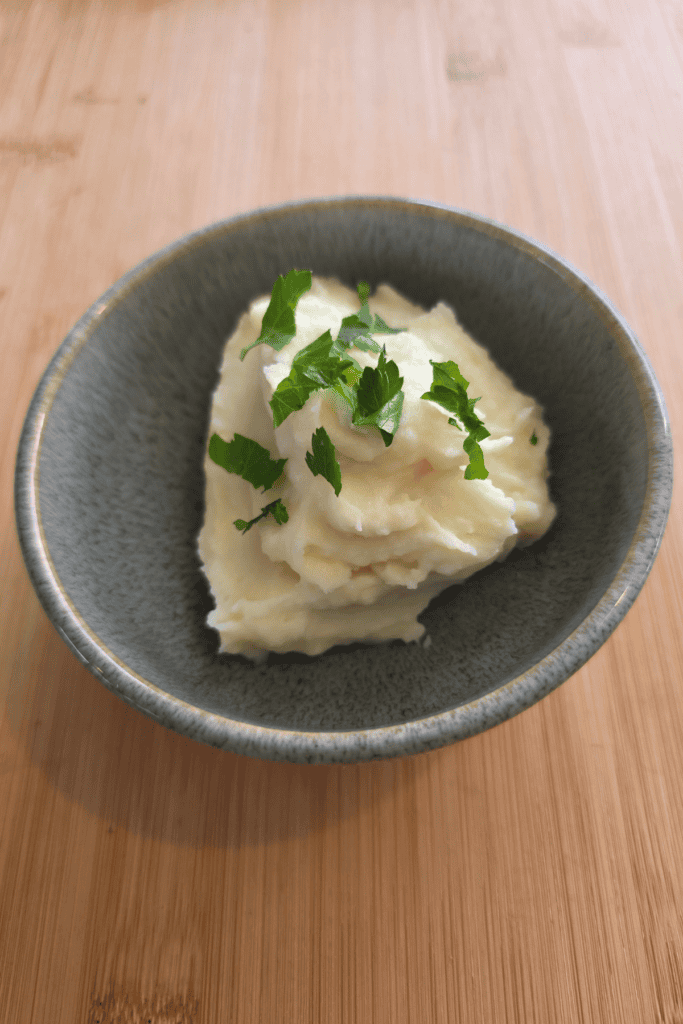
Place the frozen mashed potato into an oven-safe dish that fits inside your air fryer. Cover with foil then reheat until piping hot throughout, stirring occasionally as it warms.
The exact time will depend on how much mashed potato you’re reheating, how thickly it was frozen and your particular air fryer, so I prefer to treat the timing as a guide rather than an exact rule.
Once hot, give the potatoes a good stir. If they seem a little dry, mix through a splash of milk or a small knob of butter until they’re creamy again.
You can also reheat frozen or thawed mashed potato in the microwave or gently on the stovetop.
Stacey’s Kitchen Tips
- Cool leftover mashed potato completely before transferring it to the freezer.
- Freeze in portions that make sense for your household rather than freezing everything in one large block.
- Flattening mash in a freezer bag saves space and helps it freeze and defrost more quickly.
- Remove as much air as possible from freezer bags before sealing.
- Label the bag with the contents and date before freezing.
- A little butter or milk stirred through after reheating can help bring back that freshly mashed texture.
- Only reheat the amount you plan to eat and make sure it is piping hot throughout.
Which Freezing Method Should You Use?
Choose individual portions if: you regularly need one or two servings at a time, want something easy to grab for lunches, or have family members eating at different times.
Choose the flat freezer bag method if: you tend to serve mash as a side for the whole family, want to save freezer space or want it to thaw more quickly.
There’s no reason you can’t do both. If you have plenty left after dinner, freeze a couple of individual portions and put the rest into a flat freezer bag.
Ways to Use Frozen Mashed Potato
Frozen mash doesn’t have to come back out of the freezer as exactly the same side dish. It’s also useful for:
- Cottage pie topping
- Corned beef hash
- Serving alongside sausages and gravy
- Meatloaf and vegetables
- Beef rissoles
- Adding to fish cakes or potato patties
- Topping other savoury pies
- A quick side for a roast or slow cooker dinner
- Use it to thicken soups or casseroles
Storage, Freezer & Make-Ahead Notes
For best quality, I would aim to use frozen mashed potato within about 3-4 months, although properly frozen mashed potato can generally be kept longer.
Always cool leftover mash promptly and refrigerate it before freezing. Don’t leave cooked mashed potato sitting at room temperature for long periods before putting it away.
If you’re planning ahead, you can also deliberately make a little extra mashed potato with dinner. Freeze the leftovers using either method and you’ve effectively prepared part of another meal without doing any extra cooking.
Once thawed or reheated, I wouldn’t refreeze the mashed potato again.
Key Freezer Notes
Freezing
- Cool mashed potato before freezing.
- Freeze as individual portions or flattened in freezer-safe bags.
- Remove excess air and label with the date.
- Aim to use within 1–2 months for best quality.
Reheating
- Reheat until piping hot throughout.
- Stir during reheating to help it heat evenly.
- Add a little milk or butter if needed to restore the creamy texture.
- Air fryer, microwave and stovetop reheating all work.
Best Results
- Creamy mashed potatoes containing some butter or milk tend to reheat particularly well.
- Avoid freezing one very thick block if possible.
- Portioning before freezing makes future meals much easier.
Final Thoughts
This isn’t really about mashed potato at all – it’s about getting into the habit of looking at leftovers and asking, “Can I save this for another meal?”
Freezing something as simple as the mash left from dinner might not seem like a big deal, but those little portions soon become incredibly useful. On a busy night, being able to pull part of dinner from the freezer means one less thing to peel, chop, boil and clean up after.
I particularly like the flat bag method because it takes up hardly any room in the freezer, and you don’t end up with one enormous frozen lump of potato that takes forever to thaw.
So next time you’ve got a bowl of mash left after dinner, don’t automatically assume it needs to be eaten tomorrow. Get it into the freezer and let tonight’s leftovers make another night’s dinner a little easier.
Stacey